


Emotional Vision: Learning from Todd Hido
- G NAZHAD
- Sep 30, 2025
- 11 min read
Todd Hido is not a street photographer in the traditional sense. His work often turns toward landscapes, interiors, and portraits, but what I have learned from him goes far beyond genre. His photographs are filled with atmosphere, memory, and emotion. Looking at them reminds me that photography is not just about what we see, but about how we feel and what we carry inside of us.

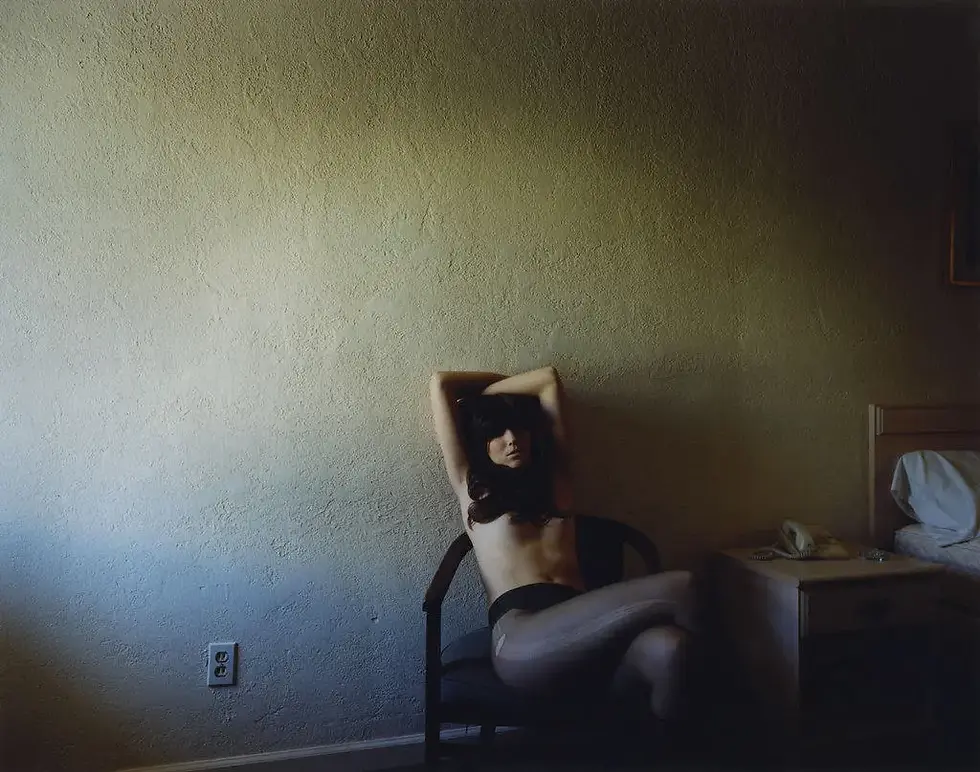
When I discovered his book On Landscapes, Interiors, and the Nude (published by Aperture), it struck me immediately. The photographs are powerful, yet quiet. The editing is sharp, only the strongest images remain. The colours are rich, the emotions layered, the silences loud. From Hido, I began to see lessons that apply deeply to street photography as well.
1. Only Keep Your Best Work
Todd Hido’s books are short, but they feel complete. Every image matters. He calls it “All killer; no filler.” In photography, it is easy to show too many pictures. Many are just filler, not real work. Only keep the photos that feel strong to you. Let each image stand alone, but also be part of a series. Don’t post just to be seen. Your work will have more impact if you only share what really matters.
2. Work Hard, But Work Smart
Hido’s work ethic is famous. He spends hours in the darkroom, printing late into the night, but he also knows when to rest. In photography, talent is not enough. You must put in hours of work. But don’t wander streets all day without purpose. Find the light, the people, the place. Plan your work, and shoot when it counts. Working smart will make your photography stronger.

3. Be Generous With Your Knowledge
Hido shares his methods and ideas freely. He teaches openly and wants others to succeed. Being open in photography is powerful. Share your techniques, give away your presets, or show your process. This generosity builds trust, respect, and connections. Sharing doesn’t make you weaker, it makes your work more meaningful to others.
4. Photograph With Purpose
Every photograph should have a reason. Hido doesn’t shoot everything he sees. There has to be a feeling, a memory, or a story that pulls him to press the shutter. As a street photographer, ask yourself why you take photos. For memory? For emotion? For discovery? Photography is more than recording, it is a conversation with yourself and the world.
5. Use Your Past
Every photograph carries a part of you. Hido returns to places from his childhood in Ohio to find images that connect with memory. Your past shapes your vision. Your experiences, your memories, your neighbourhoods, they all guide what you notice. Sometimes travel away from home helps you see your own environment differently.
6. Capture the Moment
“Measure twice, cut once,” Hido says. When something catches your eye, photograph it immediately. Don’t wait, don’t hesitate. Life moves fast. Many moments are gone before you think about them. Work to get the image right in-camera. Pay attention to composition, light, and background. Avoid relying on post-processing as a crutch.
7. Find the Emotion
No matter the composition or technique, a photograph without feeling is empty. Hido’s work is emotional. He notices strain in hands, loneliness in a figure, or tension in a street scene. Street photography is strongest when it connects with human feeling. Look for the small signs of life, the gestures, the expressions. Empathise with your subjects.
8. Step Into Another’s Shoes
One way Hido learned was through an “alter ego” assignment. He mimicked other artists, trying new ideas and approaches. This helped him discover night photography and his own voice. As photographers, experimenting by following others can open doors. It teaches you what you like, what feels natural, and where you can grow.

9. Keep It Simple
Hido likes minimalism. A clean frame, a simple subject, negative space, these make images stronger. Don’t overcrowd your photo with too much. The eye should find the subject easily. Simplicity helps emotion come through. A minimalist image can speak more loudly than a complicated one.
10. Think About People and Relationships
Hido often photographs houses, windows, or streets, but always about people. He sees light in a window and imagines life inside. Street photography is about relationships, about psychology, about the human condition. Even if your subjects are strangers, think about how they interact with each other and the world around them. Juxtaposition and context tell stories.

11. The Power of Perspective
One of the foundational lessons I learned from Magnum photographer David Hurn is that photography boils down to two controllable elements: your position and the moment you release the shutter. Todd Hido, who often reflects on spatial awareness in his own work, echoes this idea. He recalls advice from Emmet Gowin: “Photography is about position.”
Hido frequently uses diagonal lines and vanishing points in his compositions, creating a sense of depth that draws the viewer into the frame. He explains, “There’s only one photograph I’ve taken of a building straight on, like a Walker Evans. The rest are always angled or framed to pull the eye inward.”
In street photography, this principle becomes practical and urgent. Anticipating a subject approaching from down the block requires you to calculate where to stand, how to frame them against backgrounds, and whether a curb, wall, or storefront will enhance the image. If your goal is to fill the frame, proximity is key; if you want drama, consider shooting head-on, inspired by Garry Winogrand or William Klein. Even small compositional choices, like diagonal lines or tilted perspectives, can transform a simple moment into an engaging, layered photograph.

12. Inviting the Imagination
Todd Hido often compares his photography to film, seeing every scene as a stage for drama. “When I’m driving through the suburbs, I imagine scenes unfolding as if on a set,” he says. This cinematic approach is similar to street photography, where the moments you capture are less about factual documentation and more about creating a narrative infused with human emotion.
In his “House Hunting” series, Hido photographs illuminated windows, leaving the stories to the viewer’s imagination: “Anything you think is happening is happening in your own imagination.” By leaving out certain details, he allows viewers to construct their own narratives. Techniques like selective framing, shadows, and partial occlusion enhance this mystery. Rather than presenting the story outright, Hido invites viewers to participate, to fill in the blanks, and to imagine the unseen elements of the scene.
13. Embrace Ambiguity
Following on from leaving gaps for the imagination, Hido emphasises the artistic value of ambiguity. “Images should raise more questions than they answer,” he asserts. In his work, he strives to provoke curiosity rather than provide clarity: “I like when I have to ask, ‘What’s going on here?’”
He often uses reflections, shadows, and partially obscured subjects to create uncertainty. This ambiguity transforms a photograph from a static image into an active puzzle, engaging the viewer in the story. Street photography, in this sense, becomes a medium for suggestion and interpretation rather than objective representation, making the images more layered and memorable.

14. Contributing Your Voice
Finding your own voice is a challenge every photographer faces, but Todd Hido frames it as contributing to a larger conversation rather than reinventing the wheel. “Adding to the conversation doesn’t mean creating something completely unique. It means building on what’s already been done,” he explains.
In “House Hunting,” photographing houses at night isn’t new, but Hido’s focus on relationships, family, and home makes the project personal and distinct from others like Robert Adams. Similarly, contemporary photographers can reinterpret familiar locations or subjects with new perspectives, socio-political insights, or compositional approaches, thereby creating work that both resonates and stands apart.
15. The Balance of Repetition and Change
Creative work often involves a tension between maintaining a recognisable style and avoiding monotony. Hido recalls periods of anxiety about finding new ideas: “I thought I had to change everything, and of course, you can’t just do that.” He learned that repetition itself is a creative tool. “Repetition is part of the process,” he says, noting that revisiting familiar sites or subjects allowed him to discover subtle variations in light, mood, and composition.
These variations, whether adjusting time of day, perspective, or focal length offer fresh insight while maintaining stylistic coherence. The rhythm of returning to familiar elements provides stability, yet small differences keep the work evolving. It’s a reminder that growth often comes not from drastic reinvention, but from thoughtful iteration.

16. Resist Following Trends
Photography trends are fleeting, and chasing them can dilute authenticity. Hido notes, “You can’t just repeat what’s popular; that leads to empty work.” Early in his career, he was encouraged to adopt a conceptual, neutral, and objective style reminiscent of the Bechers in Düsseldorf. Yet his instincts drew him toward subjective, emotional work. “Those weren’t the kinds of pictures I wanted to make,” he reflects.
Instead of conforming to trends, Hido learned to follow his own instincts, blending subjective storytelling with personal vision. This approach emphasises that lasting work emerges from authenticity rather than imitation, and that external pressures should inform, but not dictate, creative choices.
17. The Emotional Palette of Colour
Colour is a primary conveyor of emotion in photography, and Hido treats it as a tool for narrative rather than a simple record of reality. “Blue often reads as cold; green can suggest growth or sickness,” he explains. Early in his career, he discovered in a class with Roy DeCarava that prints can be shaped subjectively: “My pictures don’t materialise straight from the camera; I choose their look and feel afterward.”
This philosophy extends to colour work. Hido adjusts tones to evoke the desired mood, balancing imaginative interpretation with believability. Whether emphasising muted pastels to convey quiet introspection or vibrant hues for intensity, he demonstrates that colour is a deliberate choice shaping perception and emotion.

18. Decisions as a Creative Engine
Art-making is a continuous process of small choices. Hido cites Larry Sultan: “Each question you encounter can lead you down a particular path.” Camera selection, black-and-white versus colour, framing, and printing are all part of this chain of decisions. Hido emphasises working step by step, trusting that incremental choices shape the evolution of a project.
By focusing on manageable decisions in the present, photographers avoid being paralysed by the enormity of a long-term vision. This approach allows creative projects to unfold organically, while maintaining cohesion and direction.
19. Setting Boundaries to Unlock Creativity
Constraints can foster imagination. Hido notes, “Sometimes you need parameters… You can always modify them because it’s yours.” Naming a project, such as “I photograph houses at night,” sets a framework without restricting creative exploration. Over time, this focus can become more specific, evolving naturally from broad categories to precise thematic or stylistic distinctions.
Parameters give structure, providing both discipline and freedom. They help photographers navigate a large body of work while remaining flexible, encouraging both exploration and refinement.

20. Follow What Moves You
Finally, Hido underscores the importance of personal passion in photography. “Photograph whatever catches your eye, whatever gets your ass out of the chair,” he advises. Photography becomes a process of discovery, responding to instinct and emotion rather than external expectations. He cites Garry Winogrand: “I photograph to find out what something will look like photographed.”
By prioritising what excites or challenges them, photographers maintain authenticity and engagement. Unexpected discoveries, contradictions, and surprises enrich the work, and the act of photographing itself becomes an essential part of the creative journey.
21. Take Short Trips
Todd Hido emphasises the rejuvenating power of brief excursions away from home. “I also started making shorter trips out of town to Ohio when I could, and also to places closer by that spoke to me,” he explains. These short journeys, even just a 30-minute drive, transport him into a different mental space, free from the distractions of home.
For street photographers, small changes in scenery can spark creativity. Visiting unfamiliar streets, neighbourhoods, or even a new corner of your own town can refresh your perspective, offering new subjects, lighting, and compositions that invigorate your work.

22. Recognise When to Stop
Hido reminds photographers to honour their own curiosity and passion: “You’re done with a project when you stop getting out of the car to photograph it, or when you stop getting your camera out of your bag.”
This guidance reflects a deeper principle: photograph only when compelled by genuine interest, not obligation.
In street photography, this means pursuing subjects and scenes that genuinely excite you. If your enthusiasm wanes, it may signal the need to pause or redirect your project. Creativity thrives when it’s effortless and heartfelt.
23. Shoot Subconsciously
Swedish photographer Anders Petersen famously said, “Shoot from the gut, edit with your brain.” Hido aligns with this philosophy: the act of photographing should engage intuition, while analysis and judgment belong to the editing process.
Much of the creative magic in street photography comes from subconscious recognition. Hido notes, “Much of what happens in a picture is subconscious at the time I make it…I learn things from my work about what I’m thinking.” Allowing intuition to guide your camera often produces the most surprising and emotionally resonant images.

24. Not Every Photo Needs an Audience
Hido underscores that not all photographs are meant to be seen publicly: “Just because I take a picture doesn’t mean that somebody has to see it.” Many images exist simply for the photographer’s personal engagement, offering practice, experimentation, or insight.
Street photographers often shoot dozens or hundreds of frames that remain unseen. Editing and self-selection create coherence and quality. The key is to enjoy the process while reserving public display for the images that truly resonate.
25. Pay Attention to Simple Gestures
Hido’s portraits highlight the power of subtle human gestures. “Very simple gestures become fascinating…If a picture lowers or raises their eyes, it changes everything.”
In street photography, these small movements, the tilt of a head, the curve of a hand, a fleeting glance can convey emotion and narrative. Observing and capturing these subtleties transforms ordinary scenes into intimate stories.

26. Make Pictures That Speak to You
Hido believes photography is a reflection of the self: “When I’m photographing people…their reality isn’t relevant. I’m interested in making a picture that speaks to me, that tells my own story.”
Street photographers, similarly, should focus on personal vision rather than objective documentation. The most compelling images communicate the photographer’s perspective, values, and emotions, often revealing as much about the creator as the subject.
27. Embrace Fiction in Your Work
Photography can blend reality and imagination. Hido notes, “You can create a fiction, but maybe you’re telling a story that’s real in the end.” Just as Picasso observed, masks can reveal truth: sometimes fabricated scenarios express emotional or psychological reality more effectively than literal representation.
In street photography, constructing scenes or finding accidental fiction in candid moments can yield images that resonate more deeply than strict documentation alone.

28. Focus on Details
“The devil is in the details,” Hido says, emphasising that small elements often make a photograph exceptional. Composition, background, colour, and gestures can elevate a shot from ordinary to compelling.
Street photographers should continually refine awareness of these details. A passerby’s hand, a shadow, or a fragment of signage can become the “cherry on top,” transforming a simple scene into a story-rich image.
29. Let Randomness Happen
Street photography thrives on unpredictability. Hido learned from Frederick Sommer that “if you predetermine everything, the photograph will look too particular.” Allowing spontaneous events, gestures, or lighting changes often produces authenticity and energy in images.
Staging certain aspects is acceptable, but leaving room for unplanned occurrences preserves realism and emotional truth. The best street photographs often emerge from the interplay between preparation and chance.

30. Capture the In-Between Moments
The most revealing photographs often occur when subjects drop their guard. Hido highlights Avedon’s portrait of Marilyn Monroe as a prime example: the iconic shot was captured just as she momentarily relaxed, revealing vulnerability and depth.
Street photographers should seek these “unguarded moments” by engaging naturally with subjects or observing candid interactions. Authenticity frequently resides in these fleeting instances, conveying insight into human behaviour that posed images cannot replicate.
To visit Hido's website: www.toddhido.com
I trust you,
Nazhad


Comments